
Performance marketing is a digital marketing strategy where advertisers pay only when a specific action is completed. These actions may include clicks, leads, app installs, sales, form submissions, or other measurable results. Unlike traditional advertising, where businesses pay for exposure regardless of outcomes, performance marketing focuses on achieving measurable and trackable results.
In today’s highly competitive digital landscape, businesses want to maximize their return on investment (ROI). Performance marketing helps companies spend their marketing budget more efficiently by ensuring they only pay for actual results. This data-driven approach has made performance marketing one of the most popular and effective forms of online advertising.
How Performance Marketing Works
Performance marketing operates on a simple principle: advertisers set specific goals, and marketing platforms track whether those goals are achieved. Businesses create campaigns on digital platforms, target the right audience, and monitor campaign performance using analytics tools.
For example, an online store may run a performance marketing campaign to increase product sales. The business pays only when users complete a purchase after clicking on an advertisement.
The process generally includes:
- Defining campaign objectives.
- Identifying the target audience.
- Creating advertisements.
- Launching campaigns on digital platforms.
- Tracking user actions.
- Optimizing campaigns for better results.
Because every action can be measured, businesses can quickly identify successful strategies and improve underperforming campaigns.
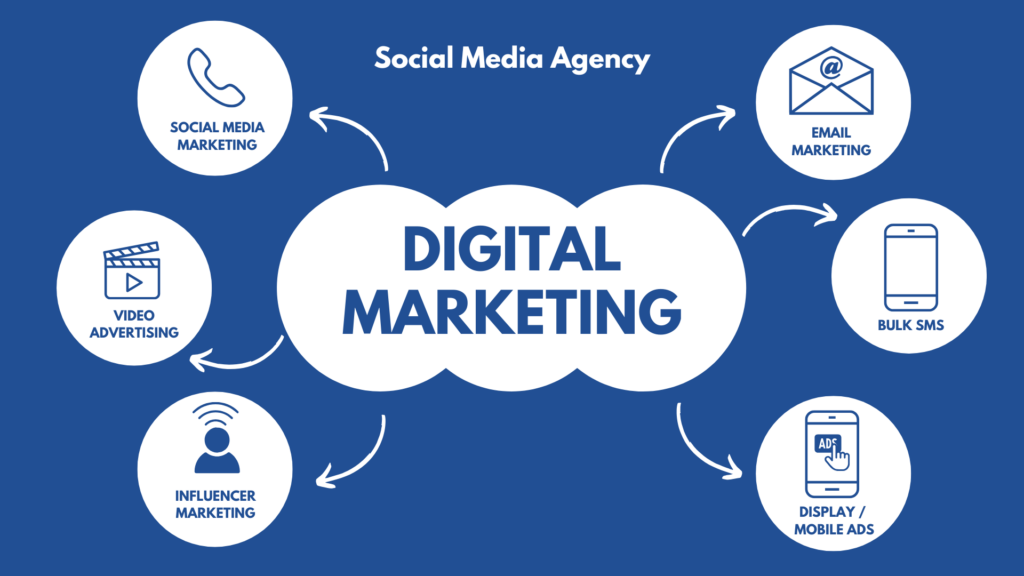
Key Channels Used in Performance Marketing
1. Search Engine Advertising
Search advertising is one of the most common forms of performance marketing. Businesses use platforms such as Google Ads to display advertisements when users search for specific keywords.
For example, a user searching for “best digital marketing agency” may see sponsored advertisements at the top of Google’s search results.
Benefits include:
- High purchase intent.
- Immediate visibility.
- Measurable conversions.
- Targeted audience reach.
2. Social Media Advertising
Social media platforms provide powerful advertising opportunities for businesses.
Popular platforms include:
- YouTube
- TikTok
- X (Twitter)
Advertisers can target users based on demographics, interests, behaviors, locations, and online activities, making campaigns highly effective.
3. Display Advertising
Display ads appear on websites, mobile apps, and online platforms. These visual advertisements help increase brand awareness and generate traffic.
Display advertising often includes:
- Banner ads
- Video ads
- Interactive ads
- Remarketing campaigns
4. Affiliate Marketing
Affiliate marketing is a performance-based model where affiliates promote products or services and earn commissions for generating sales or leads.
This approach benefits both businesses and affiliates because compensation is tied directly to results.
5. Email Marketing
Email marketing remains a valuable performance marketing channel. Businesses send targeted emails to subscribers with the goal of generating sales, registrations, or inquiries.
Performance metrics include:
- Open rates
- Click-through rates
- Conversion rates
- Revenue generated
Important Performance Marketing Metrics
One of the biggest advantages of performance marketing is the ability to track results accurately.
Click-Through Rate (CTR)
CTR measures the percentage of users who click on an advertisement after seeing it.
Cost Per Click (CPC)
CPC indicates how much an advertiser pays for each click on an advertisement.
Cost Per Lead (CPL)
CPL measures the cost of acquiring a potential customer or lead.
Cost Per Acquisition (CPA)
CPA tracks how much it costs to acquire a customer who completes a desired action.
Return on Ad Spend (ROAS)
ROAS measures revenue generated compared to advertising costs.
Conversion Rate
Conversion rate indicates the percentage of visitors who complete a desired action, such as making a purchase or filling out a contact form.

Benefits of Performance Marketing
Measurable Results
Every aspect of a campaign can be tracked and analyzed. Businesses can clearly see what is working and what needs improvement.
Better Return on Investment
Since businesses pay only for measurable actions, marketing budgets are used more efficiently.
Precise Audience Targeting
Performance marketing platforms offer advanced targeting options that help businesses reach the right audience at the right time.
Real-Time Optimization
Campaigns can be adjusted immediately based on performance data. Marketers can improve advertisements, targeting, and bidding strategies while campaigns are running.
Scalability
Successful campaigns can be scaled quickly to increase leads, sales, and revenue without significantly increasing risk.
Performance Marketing vs Traditional Marketing
Traditional marketing often focuses on exposure through television, newspapers, radio, and billboards. While these channels can increase brand awareness, measuring results accurately can be difficult.
Performance marketing differs because:
| Traditional Marketing | Performance Marketing |
|---|---|
| Focuses on visibility | Focuses on measurable actions |
| Difficult to track ROI | Easy to track ROI |
| Broad audience targeting | Highly targeted audiences |
| Fixed advertising costs | Pay for actual results |
| Limited optimization | Continuous optimization |
This accountability makes performance marketing especially attractive to businesses seeking measurable growth.
Skills Required for Performance Marketing
Successful performance marketers typically possess skills in:
- Data analysis
- Google Ads management
- Social media advertising
- Conversion rate optimization
- Audience targeting
- Marketing automation
- Landing page optimization
- Campaign reporting
These skills help maximize campaign effectiveness and improve overall performance.

Conclusion
Performance marketing is a results-driven digital marketing strategy that focuses on measurable actions such as clicks, leads, sales, and conversions. By leveraging platforms like Google Ads, social media advertising, affiliate marketing, display advertising, and email marketing, businesses can achieve their marketing objectives while maintaining full control over costs and performance. With its emphasis on data, accountability, and ROI, performance marketing has become an essential component of modern digital marketing and a powerful tool for businesses seeking sustainable growth in the digital age.